Thursday, February 21, 2013

When is the best time to have another baby?


by Helen Cox

Researchers have tried to tackle this question, and while they can't say definitively that every woman should wait two to three years between births, many of the studies do settle roughly on that time frame.

Here's a rundown of the research:

  • Waiting 18 to 23 months after the birth of your last child before conceiving another seems best for the new baby's health, according to a study published in the New England Journal of Medicine. Doctors found that babies conceived less than six months after the birth of a previous child are 40 per cent more likely to be born prematurely or underweight. And those conceived more than 10 years after their closest sibling face about double the risk of preterm birth. 
  • A similar study at the University of California in San Francisco found that the ideal interval between babies is 24 to 35 months. Babies conceived sooner had a higher incidence of low birth weight. Doctors suspect a mother's body may need that time to recover from the stress and replenish all the nutrients she lost as a result of the first pregnancy.
  • When your first child is aged under one year or aged over four years is the ideal time in terms of the children's relationships with their parents, sibling rivalry, and their own self-esteem, according to Jeannie Kidwell, a professor of family studies. She believes children under one don't have a sense of their special status yet, and that those over four have had enough time to enjoy attention from Mummy and Daddy, plus they now have a life of their own.

So what are the things you may want to consider before having a second child?


How old is your other child?

There is no right or wrong answer here, though the research, above, suggests it might not be wise to get pregnant if you've got a baby under six months. People go both ways on this question. Some think the older your other children, the better. That way they've had plenty of time with you and they can understand and even talk about the effect another child might have. Others think spacing your children close together ensures they'll be playmates for life, and that you won't be spending the rest of your life raising small children.

How will another child change your lifestyle?

Are you settled into a nice routine with your other children? Do you have good childcare set up? Are your other children sleeping through the night? Perhaps you've reached the point where you and your partner have time for each other again. Maybe you've gone back to work and you love it. These are all important considerations when you're thinking of having another. Remember, a newborn will take over your life. Consider whether you have the time and energy an infant requires, and whether your children are ready to deal with the reality of a baby in the house.

What's your financial situation?

Money isn't everything, but you do need some financial stability when you're raising a family. Considering that each child costs thousands of pounds a year to care for, you'll need a little extra in your monthly budget before you conceive another child (or you'll need to pull your belt in another notch!). It's important to consider your work situation, too. Many women find it more difficult to keep up with full- or even part-time work once the second or third child comes along. Can you afford to stay at home or to pay for the new baby's childcare if you want to stay in your job?

How old are you?

Unfortunately age is a factor, especially for women. If you're 38 years old and you want two more, you don't have the luxury of spacing them three years apart. But if you're under 30, and you don't have any health problems that could make conception difficult, you can be a little more flexible with your timing. There are no hard and fast cut-offs in terms of age. Many women can still get pregnant in their early 40s, but fertility rates do drop dramatically once you reach 35.

Do you and your partner agree?

Sometimes one partner is ready and the other isn't. It's hard to be in sync all the time. This is a tough one to settle, but the first step is to start talking about your differences. Sit down together and discuss your points of view. You may not solve anything at that moment, but you'll have a better understanding of the issues. It might help to talk to others in this situation, too.

What does your heart say?

You can mull over the pluses and minuses of having another child forever without coming to a firm conclusion. This is one of those decisions that's best led by the heart, so go ahead and follow yours. If you want another baby, and your partner wants one, too, there may be no time like the present.

What do you think about age gaps?


Catherine Hookway, Hillingdon NCT


The following quotes describe the pros and cons of close and long age gaps between children.

“I don't think there's a perfect age gap - depends on your financial circumstances, how you feel emotionally and physically, how much support you have, and also on the temperament of your older child. I think you just should go with what suits your circumstances.”

“I like having a small age gap as younger children are more resilient to change and are less likely to remember what it was like being the only one, so will be less jealous.”

“I think close spacing is hard on the parents for the first 2 years, but the benefits of having them close in age come after that, as soon as the children can play together.”

“A smaller gap gets the hard work over with quickly, but the expenses come closer together and there’s more squabbling later as the children's interests overlap.”

I am expecting my second and will have a 13 month age gap which was planned! I am the eldest of 3 and there are age gaps of 16 months then 11 months between us and we all loved being so close together and still do. I have only positive memories of it and I think  if my mum could manage with three aged under 3 living in a 2 bedroom flat and going everywhere on the bus, then I should be able to cope with 2 in a house and with a car!”

“My daughters are 14 months apart. It was very hard at first but now they are best friends. I think they will be very close as they grow up, especially as teenagers when they are going through everything together.”

“I have 3 children the first 2 are only 18 months apart. At first it was really hard battling with a new baby and a relentless toddler, but now at 3 and 4 they play well together.”

“If the older one is already at playgroup it is easier on you – you can have naps during the day when the baby sleeps to catch up on being up in the night, and that means you have a bit more energy for your older one when they get home. Unless you have family to help out it would be very hard to have a toddler at home all day and cope with being up half the night with a newborn.”

“I’d say about 2 years is ideal – certainly as adults it  seems that my friends all say they got on well with siblings around 2 years apart from them. I’m nearly 6 years older than my youngest sister which is a bit too much!”

“I have a 3 year gap between my first and second and then 4 years between her and my third. This meant I was able to devote a lot more time to them as babies, as my first was at playgroup when the second was born, and the same with the third.”

“I think a 3 year gap is great as the older one is no longer totally dependent upon you and you can devote more time to the baby.”

“I have a 3 year gap because I work and we just couldn’t afford to pay for two lots of childminding fees – we had to wait until the oldest was at school nursery. On the other hand if you are taking a few years off work, it makes more sense to have them close together so you can make the most of that time and have them settled in nursery or school before you go back to work.”

“I don’t think I could have coped with less than 3 years! It just makes it so much easier when the older one can communicate and understand what is going on, and also there are the practicalities, such as not having to carry the younger one upstairs or lift them into the car or highchair when you are pregnant.”

“My daughter is 3 and a half years older than her brother and is not jealous and is very helpful and considerate...plus with a new baby to look after I am relieved she is no longer  in the "into everything" stage...”

“I wanted a close age gap and started trying when my eldest was 4 months old. It then took us 3 years to get pregnant so we have a 4 year gap. As it turned out it works very well. Although I think there are some disadvantages because they are not at the same stage and enjoying the same things at the same time, it is much easier in many ways: my eldest started school soon after my youngest was born so they didn‘t have to compete for my attention and my eldest has never shown signs of jealousy.”

“Advantages of a larger gap are that you have time to recover physically and can also enjoy each child as an individual. It means your child has your undivided attention for the first few years and spreads costs over a longer period of time.”

 “I just think you have to go with what suits you best. I have friends with small age gaps and they love it, but also some with 4 or 5 year gaps which work really well for them. On the other hand a lot of people don’t have the choice – just depends how long it takes you to get pregnant. Whatever you decide or fate decides for you, you just have to make the best of it and the most important thing is to enjoy your children whatever family size or age gaps you have”.

What is the age gap between your children and what have been the advantages and disadvantages? Let us know by commenting below.
 

Monday, February 18, 2013

Save the Children Lobby UK Government to Prioritise Breastfeeding for G8

The lives of 95 babies could be saved every hour if mothers started breastfeeding their newborns in the hour after their birth, according to a new report by charity Save the Children.  Receiving a mother's first milk within an hour will kickstart the child's immune system, making a newborn three times more likely to survive.


If the mother continues feeding for the next six months, then a child growing up in the developing world is up to 15 times less likely to die from killer diseases such as pneumonia and diarrhoea, the report said. According to the charity, there has been enormous progress in reducing child mortality, but more could be done if mothers were encouraged to breastfeed.
"Despite the benefits of breastfeeding being widely known in the developed world, and it being a free, natural way to protect a newborn baby, too little attention is being paid to help mums breastfeed in poorer countries," said Justin Forsyth, Save the Children's chief executive.


Save The Children is calling on the UK Government to use its G8 presidency to fund nutrition work with breastfeeding and on other donor countries to step up their funding.
"This year's G8 - with the UK in the driving seat - is a once in a lifetime opportunity to focus effort on a final push to end hunger," said Mr Forsyth.

Sky News report 18 February 2013

Friday, February 15, 2013

Postnatal Depression: Experiences and Advice


The article below was recently shared with NCT editors for use in their newsletters. As someone that has suffered from postnatal depression, I thought it would be useful to share it on our blog. 

My daughter, Maria, is now 17 months old. I found the first year of motherhood very difficult. She didn’t sleep at all well and she wouldn’t be put down during the day. I didn’t adjust well from having routine, independence and lots of company every day to being completely depended on, tired and lonely!  I felt like I’d completely lost my freedom and I couldn’t get anything done! 

The worst effects were on my sleep. After a few months, I developed insomnia – I could never sleep during the day when Maria slept and my sleep patterns were so disturbed that I would lay awake at night for hours. I dreaded going to bed. It was exhausting and I was tearful a lot of the time. I felt much better when I was out and about but I didn’t like to plan anything in advance in case I didn’t sleep well.

I also received quite a lot of criticism from family, friends and health professionals about my parenting choices. Because Maria was quite an unsettled baby, some family members thought that my breast milk wasn’t enough for her so were convinced that I should bottle feed her! She wouldn’t take a bottle – she’d scream if I tried to put one in her mouth – and trying to get her to take it was an added stress!  

She would only sleep in a sling during the day and in our bed at night. I was told that this was the “biggest accidental parenting mistake” I could make! Even a health visitor, a doctor and Maria’s eczema nurse said I should try controlled crying. So I tried to get Maria to sleep in the cot. Again, she would cry and scream until she made herself sick and bang her head against the side of the cot! Another added stress!

I kept my feelings well hidden (I think!), pasting the smiles on when I was out! I remember being at one of our baby groups and other mums seemed so happy when I just wanted to cry! 

For many months I didn’t attribute my feelings to PND. I thought I’d just developed insomnia and the way I felt was a knock-on effect of that. It was only when my mum said she thought I had it and I looked up the symptoms online that I accepted it could be PND. 

I didn’t feel that the doctors were particularly supportive at first. When I originally went about not being able to sleep, I was just given some fairly rubbish advice about developing good sleeping habits and was told I couldn’t take any sleeping tablets because I was breastfeeding. PND wasn’t mentioned. 

Eventually, the need for me to take some sleep medication was behind my decision to stop breastfeeding after just over a year. It was then that the doctor also prescribed me some antidepressants. 

Since then, things have definitely improved. I’ve slept better and started enjoying motherhood! One of the factors behind feeling much better has been accepting that I’ve made the right parenting choices for my child. She’s now a very bright and happy toddler and it no longer bothers me if I get any negative comments about things such as bedsharing! I can just brush them off! And after almost five months, I’ve halved the dose of my antidepressants (with the consent of my doctor) and hope that I can come off them altogether soon.

If you have been experiencing similar problems or feelings, the following advice may be useful. It was written by Dr Charlotte Granger. She is a clinical psychologist working on a research trial for the University of Oxford, which aims to develop effective psychological therapies for postnatal depression.

Understanding postnatal depression


Having a baby involves considerable adjustment for a woman, whatever her age, lifestyle or how many children she already has.  From conception, pregnancy and birth, to the practical demands and responsibilities that take over daily life, it is a transformation on many levels, biological, physical, social and emotional. Every baby will be different in the challenges they present from pregnancy onwards, and each mother different in how she is able to cope with these and what other pressures she will also have to cope with during this time. In 10-15 per cent of new mothers, the changes and challenges involved in this adjustment will overwhelm their usual coping strategies, and they develop postnatal depression.

Symptoms of postnatal depression are similar to that of typical depression, and happen within the first year after having a baby. Natural adjustment to motherhood often includes feelings of being tired and overwhelmed, changes in sleep and appetite, and less time to relax and enjoy things.  In the first 10 days after giving birth, 80% of new mothers will experience ‘baby blues’, feeling tearful, exhausted and tense, and these feelings typically go away by themselves. Post-natal depression differs from these natural feelings when feelings of sadness, being overwhelmed or feeling anxious last longer than two weeks and are around most of the time. This persistent low mood is accompanied by difficulty in sleeping even when the baby is asleep, lack of energy, feelings of worthlessness or guilt, struggling to concentrate or make decisions, or thoughts about harming oneself. It can develop at any time in the first year of having a baby, although between three to six months after the birth is the most common time for it to occur.

Difficulties in seeking help


For many women, getting help for postnatal depression can be difficult due to the emotional impact that asking for help involves. There a number of reasons why women can find it particularly hard to admit to anyone else that they are struggling. Often women feel that they shouldn’t be depressed after having a baby, and this leads to a sense of guilt and unwillingness to talk about how they feel. They may also feel that they have no ‘obvious’ reason why they should feel sad, particularly if the baby was planned and they have a comfortable, settled lifestyle. Fears that family and friends will think they are a bad mother who should be coping better are common, particularly if experiencing low mood which increases negative thinking and makes it difficult to make decisions such as who to talk to. Often not talking about how difficult it all is leads to the depression increasing, as the mother may feel a sense of loss about not enjoying their baby’s first year, and worry that their baby is being affected.

Treating postnatal depression


Treating postnatal depression is in some ways very similar to treating typical depression; the most effective treatments are anti-depressant medication and talking therapies e.g. cognitive behaviour therapy or counselling. GPs and health visitors are widely familiar with the symptoms and will know what help can be offered in the local area.  Anti-depressant medication can be rapidly effective, and GPs can discuss what type of medication may be suitable for those mothers who are breast-feeding.
Talking to your GP or health visitor is the best way to get help if you feel you are experiencing postnatal depression. It can often be the hardest step, and if it is difficult, choose a trusted friend or family member to try talking about it with first. It is important to remember that health professionals see talking about feelings and asking for help as effective coping, rather than not coping.

Self-help strategies


There are also a number of self-help strategies that you can try to lift your mood.

Talk

Having the support of people who know you well is very important. It can also be a little too easy in modern life to not get enough daily human contact. Online shopping, emailing and texting can all give us fewer reasons to get out of the house or pick up the phone. Talking to people about the daily delights and stresses of having a baby is an anti-depressant for a number of reasons. It puts life in perspective and makes worries seem more manageable, and may lead to useful advice. It can also distract you from how you are feeling, and help you feel relaxed and supported. Be honest about how you feel with people who you trust and feel safe with. You may help more people than just yourself. The more the reality of motherhood is discussed, the more women will feel normal and understood about how they feel after having a baby.

Organise your week

Getting organised is no mean feat with any amount of small children, and therefore both the difficulty and the benefits should not be underestimated. Getting a regular routine for the week is a great anti-depressant. When feeling low, it can be too easy not to do things that are good for us. Most people will have days when they don’t want to go to work, however because they have to, they do, and generally after a short while they will feel better for having done it. Having a baby and being at home can make it much harder to get things done or go out. Make a routine for the week and schedule in baby groups, walks, time to do chores and time for yourself. Sticking to the routine even when you don’t feel like it can help you feel more in control and keep you doing things that will help with feeling better, such as getting physical exercise or seeing other people. Try to get a good balance of activities across the week, including time for what your baby needs, time for what your house and family need, and time for your own needs. 

Be kinder to yourself

Often our harshest critic is ourselves, particularly when we have a lot to cope with. Again, modern life is a major contributor to us developing a way of talking to ourselves which is harsh and judgemental. Television and the internet help us believe there is not only a right way of doing things but that everyone else is doing it right already. However, learning to talk to yourself in a warmer and encouraging way is not only likely to help you achieve more than self-criticism, but chances are if you model this to your child, they’ll grow up knowing how to talk to themselves the same way. Specifically, it is through seeing you as their parent make mistakes and recover from them that children learn mistakes are okay and how to work them out. Practice noticing your own self-critical thoughts and gently challenging them with warmer and more accepting thoughts. It can be surprising how hard this is and will take regular practice. Keep at it: even small changes to your daily life will add up over time and help life feel more manageable and enjoyable.

Advice on postnatal depression can also be found on the NCT's website http://www.nct.org.uk/parenting/postnatal-depression

Thursday, February 7, 2013

Should your baby have a dummy?

The advice about dummy use from the Cot Death Charity FSID seems fairly clear: "Settling your baby to sleep with a dummy – even for naps – can reduce the risk of cot death.", however the research isn't nearly so clear as that. The Analytical Armadillo, also known as lactation consultant Charlotte Young IBCLC, takes a look at all the research and how FSID came to this conclusion:
http://www.analyticalarmadillo.co.uk/2010/10/ask-armadillo-pacifiers-sids-whats-deal.html

Wednesday, February 6, 2013

Three Generations of Birth


by Vicky Norman, Vicky's Mum and Vicky's Gran

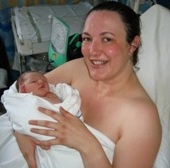
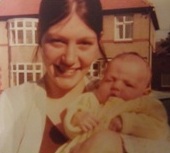
I thought it would be interesting to compare the birth experiences of three generations of my family (my grandmother, mother and myself).  As the births are separated by fifty years, I expected differences, but I didn’t expect so many similarities (especially the births experienced by me and my Grandmother).  Here are our stories......

Daniel’s Birth Story, 2006, by Vicky Norman

I had hoped that I would be one of those women that blossomed in pregnancy and breezed through the whole thing.  Unfortunately that wasn’t to be (two bleeds, a stay in hospital, twenty weeks of sickness, Symphysis Pubis Dysfunction (SPD) and severe indigestion) but I held out hope that I would be rewarded with an easy birth.  At my final antenatal appointment before my due date, my baby’s head had not engaged so it was no surprise when my due date (13 July) came and went without a twinge.

I desperately wanted a water birth, so with an induction at forty two weeks looming, I spent the next week eating hot curry and pineapple (not the best when you have indigestion) and walking for miles. 

On 22 July, we were dozing on the sofa when something woke me.  Was that a contraction?  Fifteen minutes later, I felt it again and by the third time, at 7.30pm, I knew I was in labour.  We ordered pizza and sat in the garden, excitedly talking about what was to come.  At about 11pm, we decided to get some sleep.  Lying down turned the contractions from uncomfortable to slightly painful so we got out of bed and strapped the TENS machine onto my back.

Back to bed and this time I last twenty minutes.  I was desperate for sleep but lying down made my back hurt too much so I spent the next five hours alternating between bouncing on my birthing ball and being slumped over it, trying to sleep.  David, of course, slept through all of this.  By 5am, this was no longer working so David ran a bath for me. I regretted it as soon as I got in. 

The pain was mostly in my back and I needed to move about but the bath was too restricting.  To make things worse, my groaning had attracted the attention of our cat who jumped onto the side of the bath, lost her footing and landed on me.  I now had three, six inch long scratches down my inner thigh, just what you need when preparing for a group of strangers to become acquainted with your more intimate parts!  However my contractions were now three minutes apart so, between contractions, we got ready and set off for the hospital. 

At the hospital, I was disappointed to find out I was only 3cms dilated but at least they weren’t going to send me home.  There was a birthing pool available and I was shown to a large and airy room with a huge pool.  When I got into the pool the relief was immediate and nothing was getting me out of the pool until it was all over (or so I thought)!

By 11am, the frequency and length of the contractions were increasing and although still manageable, the midwife suggested entonox.  This worked well but at 12.30pm I suddenly decided I couldn’t do it anymore.  The midwife, recognizing this as a sign of transition, confirmed I was 10cm dilated and I could start pushing shortly.

Pushing was a relief and my body instinctively knew what to do.  I found making noise a huge help.  I do feel sorry for those nearby as the noise I was making must have made it sound much worse than it was.  I pushed for the next ninety minutes and at some point my waters broke but there was still no sign of my baby.  My contractions became less regular and the midwife suggested getting out of the pool and trying a different position (sitting on the loo)!

By now my contractions had almost stopped and I was subsequently hooked up to a drip to restart my contractions and my baby was continuously monitored. I was now stuck on a bed - exactly what I didn’t want, but to be honest, I no longer minded.

The doctor was called and confirmed that the baby hadn’t descended and was actually positioned back to back.  So that was why I had been feeling the pains in my back.  The registrar tried to manually rotate my baby via an internal examination and even with a shot of pethadine, this was by far the worst part of my labour. Unfortunately, it didn’t work.  The foetal monitor showed the baby’s heart rate was dipping on each contraction (a sign that he could be in distress), so we agreed to an assisted birth.

Suddenly, the previously quiet room became a hive of activity.  The drip was turned to its highest setting resulting in contractions coming one after another, a ventouse was attached to the baby’s head and I was given a local anaesthetic and an episiotomy.  Five more pushes and our baby arrived at 2.48pm.  I think we were both in shock when this tiny person, covered in blood and gunk was placed on my chest, completely oblivious to the events of the last thirty minutes.

After nine months (and ten days) of pregnancy and almost twenty hours of labour, it was amazing to finally meet our son.  It is clichéd, but the love we felt for Daniel was immediate, as though he had been part of our lives forever.  As planned, David cut the cord but I don’t recall birthing the placenta or being stitched as I was so focused on my amazing baby.  The midwives left us alone and that first hour, bonding as a family, will stay with me forever.

Victoria’s Birth Story, 1974, by Lynn Campbell

I had suspected I was pregnant for a while but a visit to the doctor at ten weeks confirmed my suspicions.  Following my GP appointment, I received a generous gift from a kind aunt who paid for private antenatal care. From then on, my antenatal appointments were with Sunderland’s leading consultant, whose consulting rooms were at his house (something that wouldn’t happen now)!

Fortunately I had a very easy pregnancy with no unpleasant symptoms.  There were no scans or tests for abnormalities, so the only reassurance was from an occasional internal examination and from hearing the baby’s heartbeat.  As the weeks went on, our feelings of excitement increased and I, alongside several members of my family, spent many hours knitting baby clothes.

I had an antenatal appointment on my due date but there were no signs of me going into labour naturally.  The consultant’s plan was that I would be induced in two days and it didn’t occur to me to question this!  That evening, I headed to Roker docks with my parents to wave my younger sister off on a school cruise.  Whilst standing at the dockside, my waters broke and contractions started immediately.  We walked home, contacted the hospital and were asked to come in straight away.

I arrived at the hospital at 8pm and after being examined, I was told that it wouldn’t be too long.  My husband arrived and whilst fathers weren’t discouraged from attending the birth, they certainly weren’t encouraged.  During my labour, my mam and husband popped in from time to time, but both were absent at the birth.  There was no discussion about trying different positions for labour and birth and it was assumed that I would remain on the bed the whole time.  As my labour quickly progressed, I was offered pain relief and gladly accepted entonox and pethadine which certainly took the edge off the contractions.  The midwives called the consultant at home and whilst he attended the birth, it was very much led by the midwives.

Finally after only five hours of labour I gave birth to a beautiful baby girl called Victoria Jane at 12.10am on 25 June with the help of one midwife and the consultant.  I had suspected I was having a girl so was thrilled when this was finally confirmed. I had a very straightforward birth and fortunately required no intervention and no stitches.  My husband and mam were immediately shown into the delivery suite and my dad joined us shortly after.  As it was during the night we spent an hour together before my visitors were asked to leave and we were settled into a private room.

It was quite unusual to have a private room and also unusual for a newborn to stay with their mam overnight.  Despite being exhausted, I spent the night gazing at my newborn baby as I couldn’t quite believe she was finally here.  It was also assumed that I would bottle feed my daughter and the hospital provided bottles, formula etc.  Breast feeding was never discussed and it certainly wasn’t promoted in the way it is now.

At that time, it was usual to stay in hospital for five days post birth, but as we had no complications, we were discharged after thirty-six hours. It was exciting and a little nerve-racking taking our daughter home, but we had such incredible support from family and friends and were never without visitors.


Lynn’s Birth Story, 1957, by Doreen MacDonald

We were delighted when my doctor confirmed I was pregnant as we had just started trying to conceive.  My pregnancy progressed well and I felt fit and healthy, however at the end of my first trimester, I became very ill and was rushed to hospital.  Initially the doctors suspected an ectopic pregnancy but quickly realized it was appendicitis.  Despite being pregnant, I was taken to surgery, put under a general anesthetic and my appendix was safely removed.  I was later told I was very lucky that I didn’t miscarry.

Fortunately the rest of my pregnancy continued without drama and I worked up until my due date.  As the only female in the office, I was well looked after. Three days over my due date I went into labour in the early hours of Easter Sunday. We didn’t have a car or telephone so my husband, Ronnie, called an ambulance to take us to hospital from a neighbour’s house.

On arrival at the hospital, Ronnie was shown to the waiting room and I didn’t see him again until after I had given birth. As it was Easter Sunday, the hospital was short staffed so I spent much of my labour on my own with the midwives checking in occasionally.  The midwives were very stern and did little to relax or comfort me, and unlike today’s births, I was given little information about what was happening.

Unfortunately, there were complications and after sixteen hours of labour I found myself being wheeled into theatre for an assisted delivery.  Even after fifty-five years I have very clear memories of my legs being strapped into stirrups and my baby girl, Lynn, being delivered by forceps.  Unfortunately, worse was to come.  The doctor was concerned that Lynn may have suffered head injuries during the delivery so she was taken to special care for two days.  Not being able to hold, or even see our newborn was one of the worst times of our lives, as was being on the ward where all of the other mums had their babies with them.

After two days in special care, the doctors were happy that Lynn was injury free and we finally got to meet our beautiful daughter.  I was desperate to return home so we could start being a family, but back then a ten day hospital stay was the norm.  When I was discharged, I vowed that if I had another child I would opt for a home birth.  Two years later I got my wish when Ann was born at home.

Writing this article has been extremely fulfilling as I previously knew little about my own birth and that of my mother. Just like my grandmother, I too decided on a home birth for my second child following a medicalised first delivery.  My grandmother was very supportive of our decision for a home birth and now I understand why!

Sunday, February 3, 2013

Napping when your baby naps

A recent, small-scale, study seems to suggest that mothers who nap interact better with their babies.

So, what does this mean for new parents? Even a few naps per week when you are significantly fatigued can be help promote more positive interactions with your baby! The authors also suggest that scheduling weekend naps may be useful for mothers that cannot nap during the week.

http://www.secretsofbabybehavior.com/2013/01/new-study-effect-of-maternal-napping.html
Related Posts Plugin for WordPress, Blogger...